



In the UK, our homes are more than just buildings; they are sanctuaries. Whether you are coming home after a long winter commute or hosting a summer BBQ on the patio, the right outdoor wall lights transform the atmosphere and security of your property.
At Lampsmodern, we believe that a well-lit exterior is the final touch of a sophisticated home. However, installing lights in the unpredictable British weather requires more than just a screwdriver—it requires a commitment to safety and technical precision. This guide will walk you through everything from UK Building Regulations to the professional "tricks of the trade" for a perfect finish.
1. Safety and the Law: Understanding Part P
Before you pick up a drill, you must understand the legal landscape. In England and Wales, electrical work in the garden is governed by Building Regulations Part P.
- Fixed Installations: Any new circuit or significant alteration to your fixed wiring is "notifiable" to your local building control department.
- DIY vs. Professional: While you can technically swap an existing light fitting yourself, any work involving a new power source or drilling through external walls should ideally be certified by a NICEIC or NAPIT registered electrician to ensure your home insurance remains valid.
- RCD Protection: All outdoor lighting circuits must be protected by a Residual Current Device (RCD) with a trip current of no more than $30mA$ to prevent fatal electric shocks in wet conditions.
2. Choosing the Right Protection (IP Ratings)
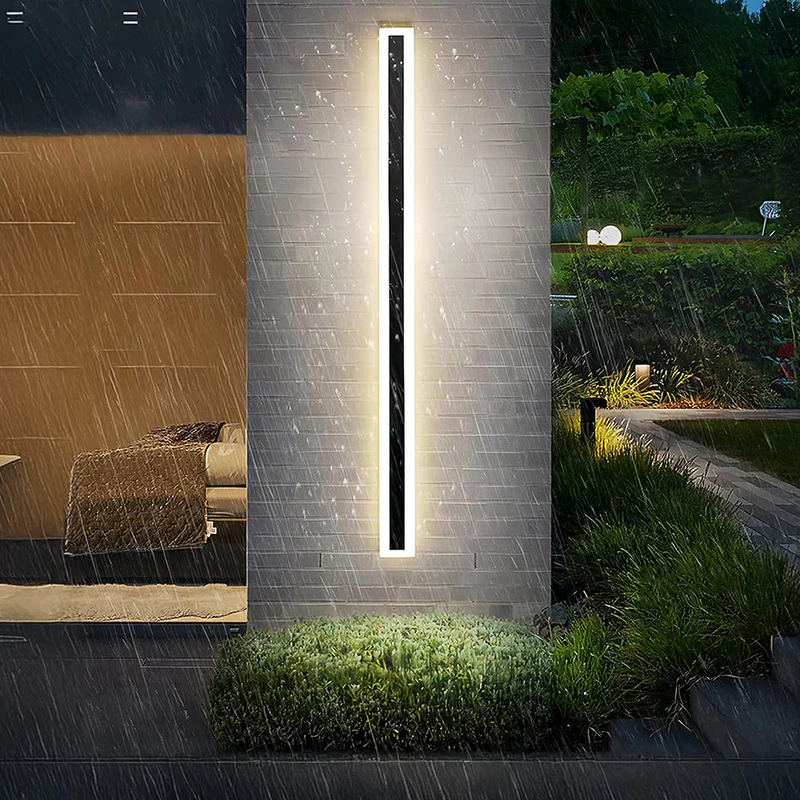
UK weather is notoriously wet. To ensure your investment lasts, you must choose a fixture with the correct Ingress Protection (IP) rating. The first digit represents protection against solids (dust/insects), while the second represents protection against liquids.
| Installation Zone | Recommended IP Rating | Why it Matters |
|---|---|---|
| Sheltered Porch / Under Eaves | IP44 | Protected against splashes from any direction. |
| Exposed Garden Walls / Fences | IP65 | Dust-tight and resistant to low-pressure water jets (heavy rain). |
| Ground Level / Near Puddles | IP67 | Can withstand temporary immersion in water. |
Expert Tip: While IP44 is common, we recommend IP65 for most UK exterior walls to handle our frequent driving rain.
3. UK Wiring Colours: Old vs. New
If you live in a period home, you might find a mix of wiring colours. In 2004, the UK harmonised its colours with the rest of Europe to avoid confusion.
| Function | Modern Colour (Post-2006) | Old Colour (Pre-2006) |
|---|---|---|
| Live (L) | Brown | Red |
| Neutral (N) | Blue | Black |
| Earth (E) | Green/Yellow | Green or Bare Copper |
4. The Installation Process: Step-by-Step
Tools You Will Need
- SDS Drill & Masonry bits (12mm is standard for cable entry).
- Voltage Tester / Multimeter.
- Wire strippers and insulated screwdrivers.
- Silicone sealant and caulking gun.
- Fused Connection Unit (FCU) and a 3A or 5A fuse.
Step 1: Marking and Positioning
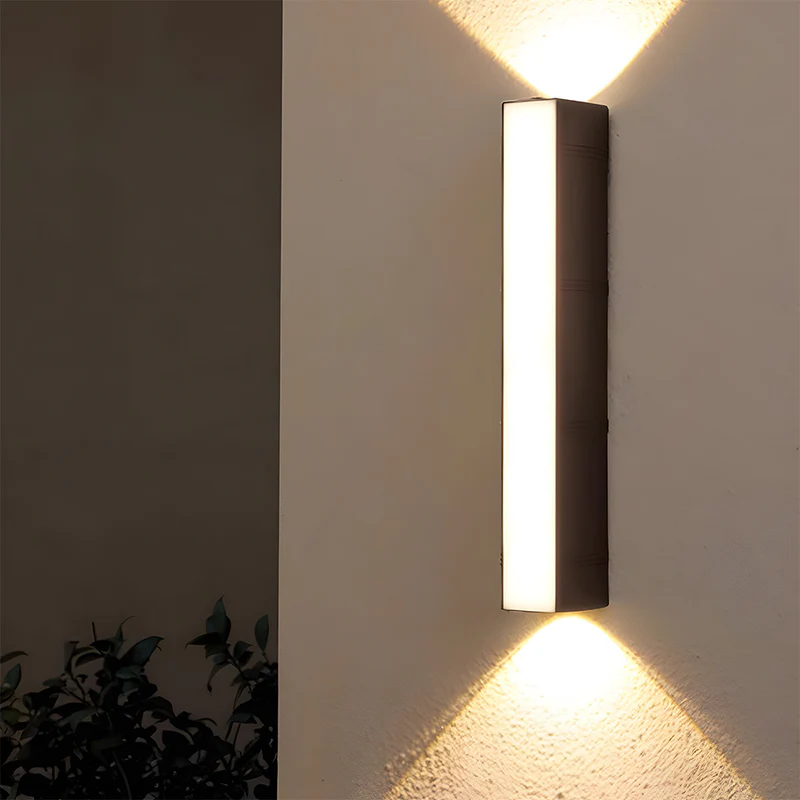
Use a level to mark your holes. For Up and Down lights, we suggest mounting them at eye level (approx. 1.6m – 1.7m) to highlight the wall texture without creating uncomfortable glare.
Step 2: The "Upward Drill" Trick
When drilling the main cable hole through the brickwork, drill from the outside in to prevent "blowing out" the brick face. Critical Safety Tip: Angle your drill bit slightly upwards toward the inside of the house. This creates a natural slope that prevents rainwater from tracking along the cable into your home cavity.
Step 3: Wiring and Circuit Protection
If you are pulling power from an indoor socket circuit (Ring Main), you must install a Fused Spur. Most household sockets use a 13A fuse, but for a lighting circuit, you must swap this for a 3A or 5A fuse to protect the smaller lighting cables.
Step 4: Sealing the Deal
Once the backplate is secured and the wires are connected, apply a bead of clear silicone caulk around the top and sides of the light fixture. Important: Leave a small gap (approx. 5mm) at the very bottom of the seal. This acts as a "weep hole," allowing any internal condensation to escape rather than pooling inside the electrical housing.
5. Enhancing Your Setup: Sensors and Smart Tech
Modern UK gardens are becoming "smarter." Consider these features to add convenience to your home:
- PIR Sensors (Motion Detection): Perfect for security and welcoming guests. Ensure the sensor lens is clean and not blocked by swaying branches to avoid false triggers.
- Photocells (Dusk to Dawn): These sensors automatically turn your lights on at sunset and off at sunrise. It is a "set and forget" solution for year-round convenience.
- Colour Temperature: For residential areas, we recommend 2700K to 3000K (Warm White). It creates a cosy, resort-like feel and is significantly less disruptive to local wildlife and neighbours compared to harsh "Cool White" bulbs.
Conclusion
Installing outdoor wall lights is one of the most rewarding home improvement projects you can undertake. By following Part P regulations, choosing the right IP65 hardware, and using professional sealing techniques, you ensure your home stays both beautiful and safe through every British season.
Ready to light up your night? Explore our full collection of weather-resistant fixtures at Lampsmodern UK today.
Disclaimer: This guide is for informational purposes. Electrical work can be dangerous. If you are unsure at any stage, please consult a qualified, registered electrician.